Drainage That Handles Real Watershed Conditions
Drainage Solutions and Water Management in New Freedom for properties where water pooling, runoff direction, or pond construction require engineered site intervention
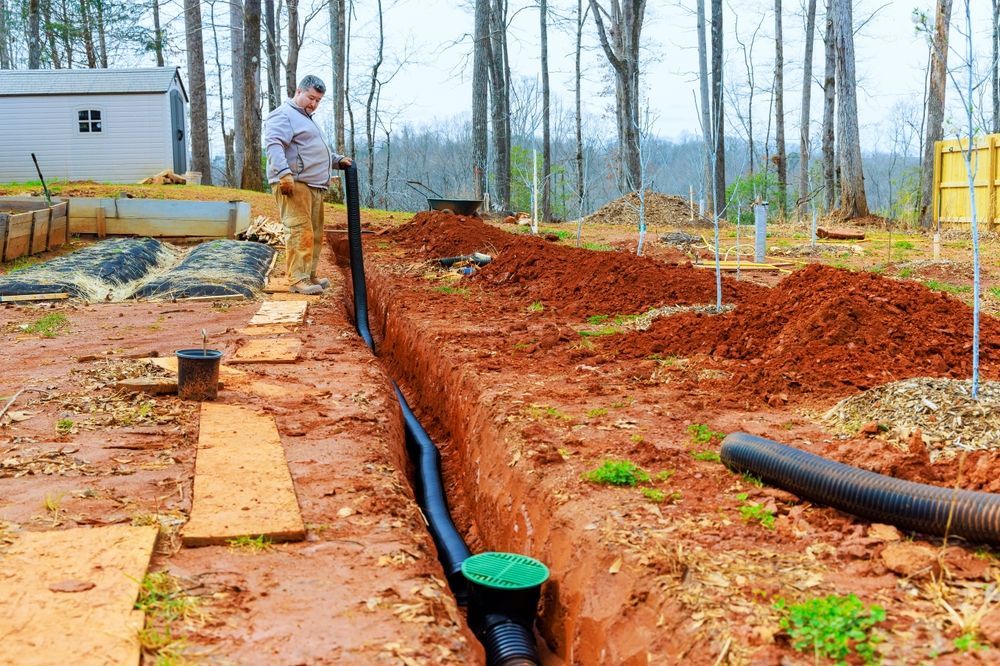
Water that moves incorrectly across a site doesn't announce itself through a single dramatic failure—it shows up as persistent pooling near foundations, erosion at slope edges, saturated areas that prevent equipment access, and pond banks that erode with each rain event. NorthWind Land Developers addresses those conditions through drainage solutions and water management work in New Freedom, with all pond construction and erosion control work performed in compliance with Chesapeake Bay watershed requirements—a non-negotiable regulatory framework that governs how land disturbance and water management are handled across this region.
The Chesapeake Bay watershed designation covers a significant portion of York County, which means that excavation, grading, and pond construction projects in the Jarrettsville and Hampstead corridors require erosion and sediment control measures from the first day of disturbance through final stabilization. Those requirements affect how pond banks are shaped, how spillways are sized and positioned, and how disturbed areas are stabilized between construction phases. Pond construction that ignores spillway design—one of the most commonly underbuilt components on rural property ponds—creates a structure that either overtops destructively during high-flow events or undermines the dam embankment from beneath through uncontrolled seepage.
Set up a site walkthrough to evaluate existing drainage patterns, identify where water is collecting or causing erosion, and determine what management approach fits your property's conditions.
How Drainage Work Addresses Water Movement Problems
Pond construction involves three distinct technical phases that each affect long-term performance: excavation to the correct basin depth and shape, compaction of the dam embankment to prevent seepage, and spillway design that allows controlled overflow during storm events without eroding the outlet structure. Skipping or shortcutting any of these phases produces a pond that either loses water through the embankment, overtops during normal rain events, or drains the outlet structure through scour. NorthWind sequences these phases with proper compaction between lifts of embankment fill and positions spillways at elevations that provide adequate freeboard above normal pool level.
After drainage work is complete, what changes on the property is observable and functional: water that previously pooled near structures moves through defined drainage paths, pond banks hold their shape through seasonal water level fluctuations, and disturbed areas show vegetative stabilization that prevents sediment from moving off-site. Those outcomes are directly tied to whether initial compaction and spillway design were done correctly—properties where pond construction was performed without proper embankment compaction typically show seepage lines appearing on the downstream face of the dam within the first few wet seasons.
Drainage solutions vary significantly in scale and approach depending on the problem. Surface grading to redirect sheet flow away from a foundation is a different scope than installing subsurface drainage channels or constructing a retention pond sized to capture runoff from a developed parcel. Chesapeake Bay watershed compliance requirements also scale with project size and the amount of impervious surface created—larger projects trigger more detailed erosion and sediment control plans, which NorthWind factors into project planning from the initial site evaluation rather than addressing as a permit afterthought.
Common Questions About Drainage and Water Management
Water management projects in the Chesapeake Bay watershed involve regulatory considerations that don't apply to drainage work in other regions, and pond construction involves structural decisions that affect performance for decades. The questions below address what property owners in New Freedom and surrounding areas most often need to clarify before work begins.
What Chesapeake Bay watershed requirements apply to pond construction in York County?
Projects involving land disturbance in the watershed must include erosion and sediment controls throughout construction, with specific requirements for stabilizing disturbed soil within defined timeframes and managing runoff so it doesn't carry sediment off-site during or after construction.
How is spillway size determined for a private pond?
Spillway capacity is calculated based on the drainage area above the pond and the peak flow rate expected during a design storm event—undersizing a spillway is one of the most common causes of pond dam failure because it allows water to overtop the embankment at uncontrolled velocities.
Why does embankment compaction matter more than embankment size?
A larger dam built from uncompacted fill seeps more readily than a smaller dam compacted in lifts to the correct density—seepage through the embankment causes internal erosion called piping, which can lead to sudden embankment failure even when the pond water level appears normal.
When is subsurface drainage the right solution instead of surface grading?
Subsurface drainage is appropriate when surface grading alone cannot redirect water fast enough to prevent saturation—typically in areas with low permeability soils, high seasonal water tables, or where the topography doesn't allow enough slope to move water by gravity across the surface.
What maintenance does a properly constructed pond typically need?
A pond built with correct compaction, proper spillway placement, and stabilized banks requires periodic inspection of the spillway outlet for scour, monitoring of the dam face for seepage signs, and management of vegetation that could allow root penetration to compromise the embankment over time.
NorthWind Land Developers manages drainage solutions and water management projects in New Freedom with full attention to Chesapeake Bay watershed compliance and long-term site performance. Connect with NorthWind to evaluate your property's water management needs and develop a plan that meets both your site goals and applicable regulatory requirements.