
Clearing Rural Land Without Wrecking What Stays
Land Clearing and Forestry Mulching in New Freedom for rural property owners managing timber, brush, and access on residential lots and multi-acre tracts
Standing timber and dense brush on a rural property represent both an obstacle and an asset—how they're handled during clearing determines whether the site is left clean and buildable or stripped in ways that damage remaining trees and destabilize soil. NorthWind Land Developers provides land clearing and forestry mulching services in New Freedom, working on properties ranging from small residential lots near Stewartstown to multi-acre tracts requiring road and path layout as part of the clearing scope. The difference between sites that size is not just equipment—it's how the clearing boundary is managed and what happens to the material that comes down.
Rural properties in the region frequently carry timber that owners want removed before developing or building, and that material has practical value if it's handled correctly. On request, NorthWind cuts and cords firewood from cleared timber, which gives property owners a direct return from the clearing work rather than simply paying to have material hauled away. Paths for ATV access or future road installation are also laid out during larger clearing operations, with equipment scaled to the tract size—hand-finished edges on small residential lots versus mechanized path grading on larger parcels where precision matters less than coverage and efficiency.
Request a property walkthrough to identify clearing boundaries, assess timber value, and determine what access paths or buildable areas your land can support.
What Land Clearing Actually Accomplishes
Land clearing is not simply the removal of everything visible above ground. Proper clearing separates the buildable footprint from the surrounding forestry with edges that don't invite erosion or pest pressure from disturbed root zones. On sites where selective clearing is the goal—keeping mature trees that frame a future structure or preserving a tree line for privacy—the clearing approach uses equipment that can work close to retained trees without damaging surface roots or bark, which are the two most common points of failure when heavy equipment operates near trees intended to survive the project.
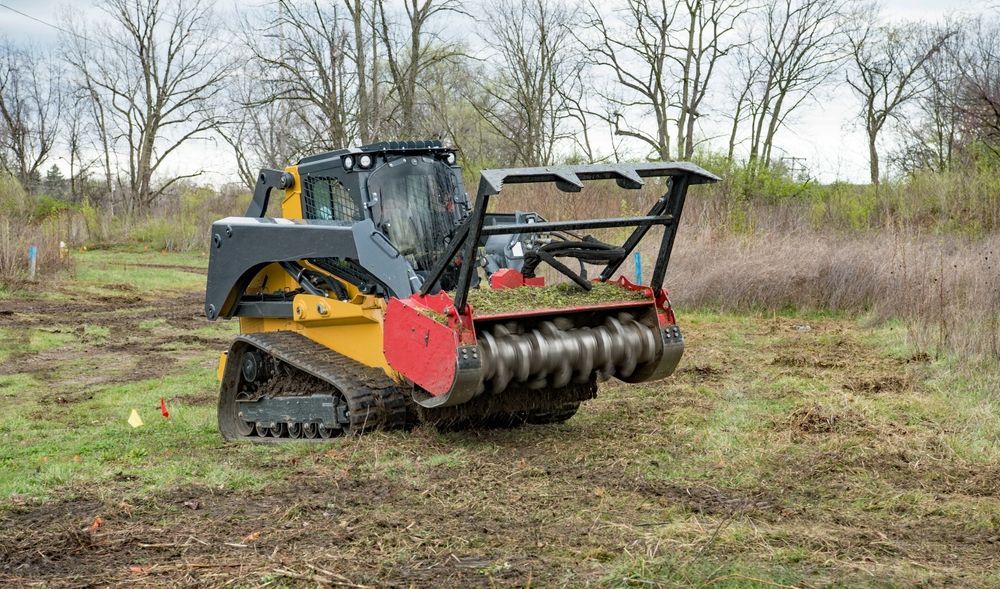
After clearing is complete, what you see is a defined, accessible footprint ready for grading or construction, with retained trees showing no visible damage at the drip line and cut stumps either ground to grade or left at a height specified for removal. Material that isn't cordwood or path fill is processed through forestry mulching, which returns organic matter to the soil rather than hauling it to a landfill—a practical outcome that also reduces the truck traffic and tipping fees that add to clearing costs on large properties.
Multi-acre clearing around the Bel Air and Stewartstown corridors often includes preliminary road layout as part of the scope, since access for subsequent construction equipment depends on a stable entry point being established early. That sequencing decision—whether to clear the building footprint first or establish site access first—depends on topography and where the most favorable equipment entry point exists on the property. NorthWind evaluates that routing during the initial property walkthrough rather than defaulting to a fixed sequence.
Answers to Frequent Land Clearing Questions
Property owners planning their first clearing project often underestimate how much the site's specific conditions affect both the approach and the outcome. The questions below reflect what typically comes up when evaluating a rural clearing project in this region.
What's the difference between forestry mulching and standard land clearing?
Standard clearing removes and hauls material off-site, while forestry mulching grinds trees, brush, and stumps in place using a rotary drum head, returning processed material to the soil and eliminating the cost and logistics of hauling debris away.
How do you clear land without damaging trees that are staying?
Equipment is kept outside the drip line of retained trees, which is roughly the outer edge of the canopy, and hand tools are used to remove brush closer in—root damage and bark stripping from machinery are the two most common causes of delayed tree death after clearing.
When is the best time of year to clear land in New Freedom?
Late fall through early spring clearing is generally preferable because frozen or firm ground reduces soil compaction from equipment travel, and the absence of foliage makes it easier to assess canopy structure and identify which trees are worth retaining.
Why does path layout matter during clearing rather than after?
Establishing access paths during the clearing phase allows equipment to work efficiently across the site without repeated passes over the same ground, and it ensures the final path grade is set before soil is disturbed by construction traffic.
What happens to the firewood from cleared trees?
On request, timber is cut to firewood length and split or corded on-site, giving property owners a direct use for material that would otherwise be chipped or hauled—the quantity and species mix depends on what's standing on the specific tract.
NorthWind Land Developers manages land clearing and forestry mulching for residential lots and multi-acre rural tracts in and around New Freedom. Connect with NorthWind to walk your property and outline what clearing, access, and timber recovery can look like for your specific site.