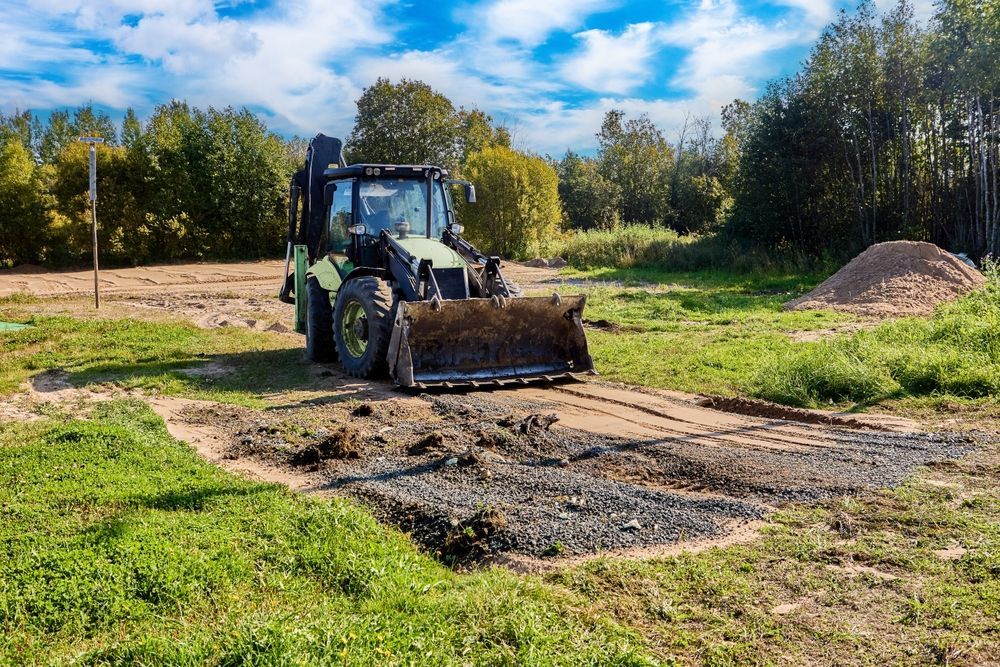

Land Prepared for Systems That Produce Power
Solar and Agrivoltaic Site Preparation in New Freedom for agricultural and industrial land where panel placement, electrical runs, and surface conditions require coordinated site work
Southern Pennsylvania's mix of agricultural land, rural industrial parcels, and growing demand for on-site energy generation has made solar site preparation a distinct category of earthwork—one where panel spacing, electrical trench routing, and surface grading all interact in ways that affect long-term system performance. NorthWind Land Developers prepares sites for solar arrays and agrivoltaic systems in the York and Lancaster area, handling the grading, mounting infrastructure installation, and electrical trenching that brings a solar project from a conceptual layout to a field-ready installation. The process includes consultation on integrated renewable energy solutions, with specific experience in agrivoltaic configurations and waterless cooling tower technology for data center applications.
Site assessment determines optimal panel placement by evaluating slope, soil bearing capacity, shading from existing tree lines, and drainage patterns that could affect foundation performance for ground-mount systems. Grading and leveling follow, preparing the surface to the tolerances required by the mounting system specifications provided by the project engineer. Electrical trenches are then run to code depth for the required conductor types, coordinating with the system integrator's layout to minimize trench length while meeting separation requirements between power and data lines.
Request a site assessment to evaluate grading requirements and electrical routing for your planned solar installation.
Why Agrivoltaic Spacing Decisions Affect More Than Energy Output
Agrivoltaic system design requires a specific approach to row spacing and panel height that differs from standard utility-scale solar. The panel layout must allow sufficient light penetration and equipment access for whatever crop or livestock use is planned beneath the array—which means the site preparation phase has to incorporate those agricultural requirements into the grading and mounting design, not treat them as a secondary consideration. NorthWind Land Developers coordinates with engineers during this phase to confirm that spacing decisions serve both energy production targets and the agricultural use planned for the land beneath.
Once site work is complete, the installation area reflects a graded, compacted surface with mounting infrastructure in place and electrical trenches backfilled and marked according to the system layout. Landowners moving forward with agrivoltaic use will see defined row corridors that accommodate farm equipment access, which is the operational detail that determines whether the dual-use model is practical after installation. For projects incorporating waterless cooling tower systems—developed specifically to eliminate water consumption in thermal management applications—the site preparation includes engineered placement and structural foundations for those components as part of the same project scope.
Solar site preparation scope varies significantly based on system size, terrain complexity, and whether the project involves standard photovoltaic installation, agrivoltaic configuration, or integration with building energy systems. Properties with steeper grades require more significant cut-and-fill work to achieve the level panels required for fixed-tilt mounting systems, while flat agricultural land may need only minimal grading but careful attention to drainage so that surface water doesn't accumulate beneath the array and affect soil conditions.
Questions Before Starting Your Solar Project
Landowners preparing for solar installations near York and New Freedom frequently want to understand how site conditions affect the preparation process and what distinguishes agrivoltaic projects from standard solar development.
What does a solar site assessment evaluate before grading begins?
The assessment examines slope, soil bearing capacity, drainage patterns, shading from trees or structures, and the proposed system layout to determine what grading, drainage improvements, and infrastructure work are needed before mounting equipment is delivered.
How is an agrivoltaic installation different from a standard solar array in terms of site work?
Agrivoltaic systems require panel row spacing and mounting heights designed to allow crop growth or livestock movement beneath the array, which means grading and foundation work must account for farm equipment clearance and light distribution patterns rather than treating the ground plane as unused space.
Why does electrical trench routing matter for solar installations on agricultural land?
Trench routing that conflicts with tillage equipment paths or crosses high-traffic areas of the property creates long-term maintenance challenges, so routing decisions during site preparation should reflect how the land will actually be used after the system is operational.
What local conditions in the York and Lancaster area affect solar site grading?
Seasonal rainfall patterns in central Pennsylvania create surface drainage considerations for any ground-mounted system—panels shed water in concentrated flows that can erode soil beneath arrays if surface drainage isn't designed into the grading plan from the start.
What is a waterless cooling tower and how does it relate to solar site preparation work?
A waterless cooling tower provides thermal management for data centers or industrial facilities without drawing on local water supplies—NorthWind Land Developers has developed and installed these systems with engineering partners, and site preparation for them involves structural foundation work and utility connections as part of integrated energy site projects.
NorthWind Land Developers brings direct design and build experience with both photovoltaic and agrivoltaic installations, as well as the waterless cooling technology that addresses energy and water concerns simultaneously. Connect with NorthWind Land Developers at (667) 228-7002 to discuss your land's suitability and what site preparation your energy project requires.